Topical maps, built inside your own AI
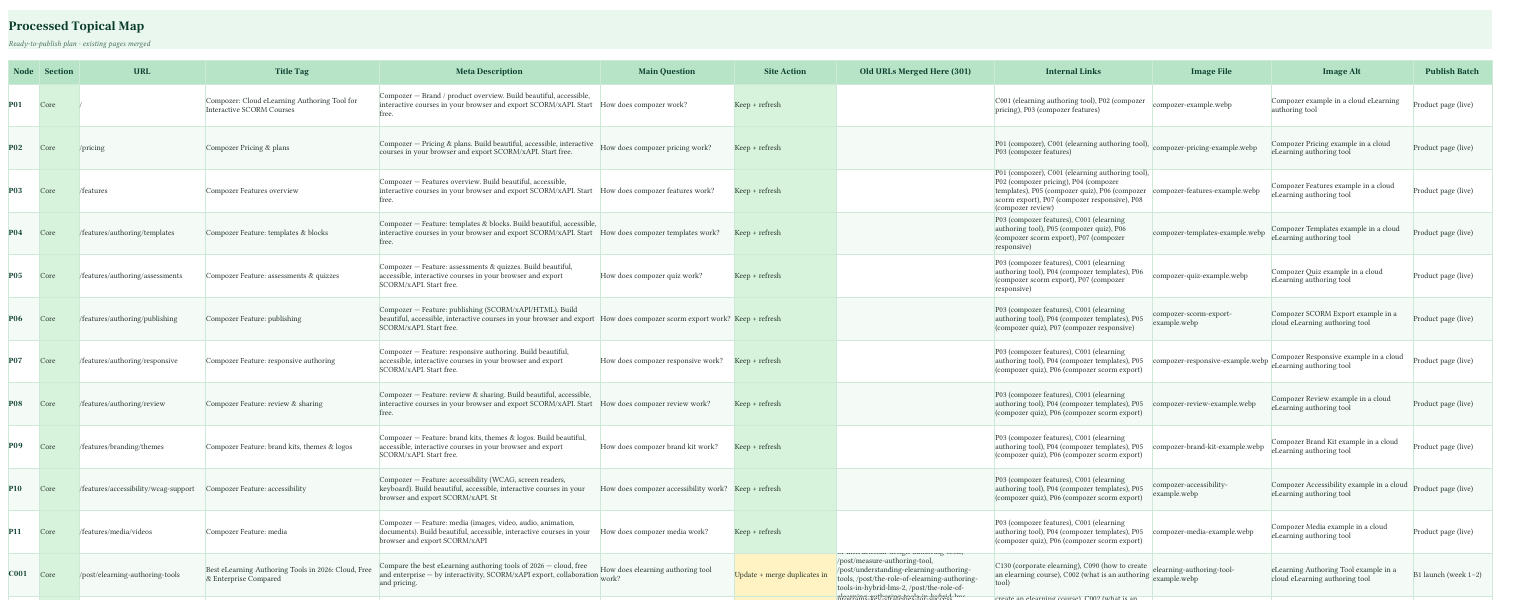
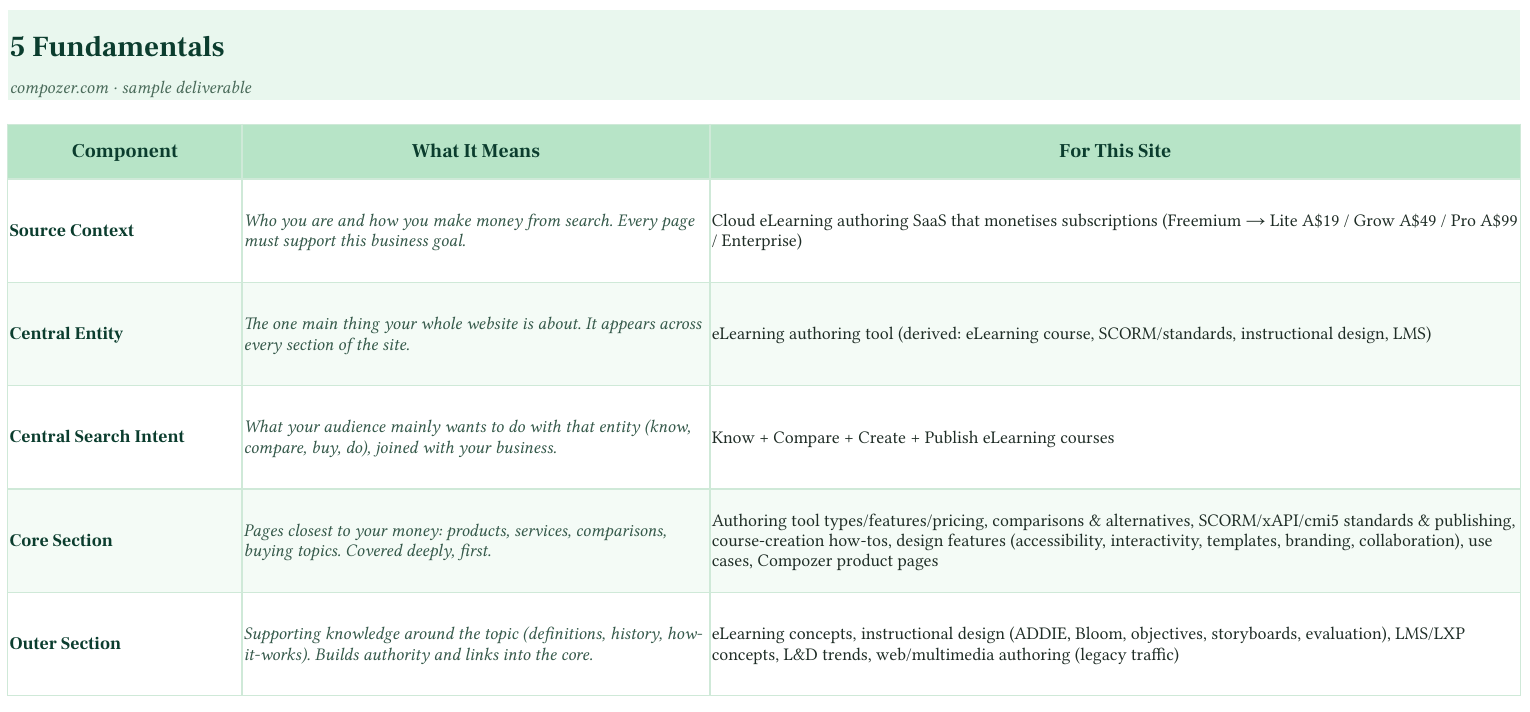
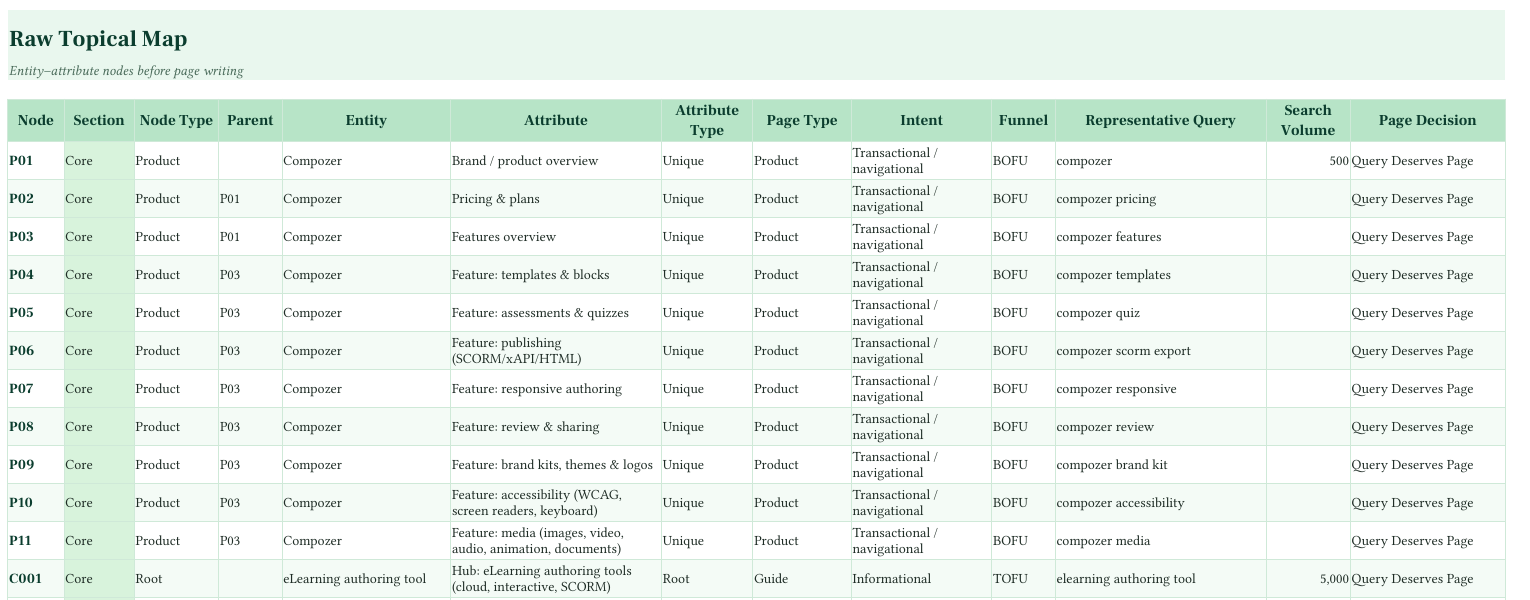
Connect Claude Code, Codex or Cursor to our MCP server. Your assistant runs the Koray framework step by step and you download one finished xlsx.
- You get
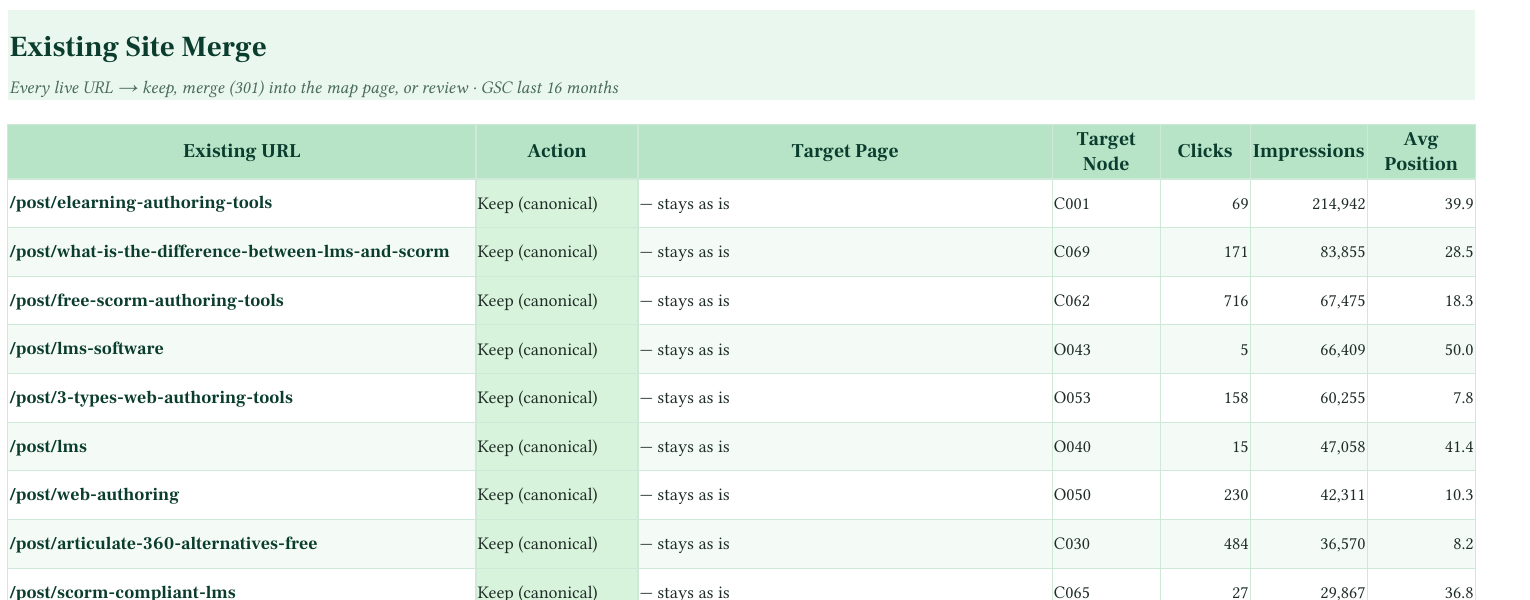
- 5 Fundamentals, Raw Topical Map, Processed Topical Map, plus Existing Site Merge for live sites
- Runs in
- Claude Code, Codex and Cursor today. Claude.ai and ChatGPT connectors are next.
- Data
- Your own DataForSEO, Serper or Semrush keys, or estimates marked as estimates
- Price
- From $9.99 a month
How a map gets built
Your assistant does the reasoning in your own subscription. Our server keeps the project state, collects search data, clusters queries, checks SERP overlap, validates each step and writes the workbook.
- 1
Request access
Sign in with an email link or Google. We review each account by hand, then you pick a plan.
- 2
Add the MCP server
One command in Claude Code, or a few lines of config in Codex or Cursor.
claude mcp add --transport http rokonz-topical-map \
  https://app.multiverseseo.com/mcp \
  --header "Authorization: Bearer YOUR_API_KEY"
- 3
Answer the intake
Nine questions about the site: how it earns, what it offers, who it serves, the market and language, and which competitors to measure against.
- 4
The method runs
Source context and central entity first, then terminology, entity attributes, query clusters and SERP overlap. Each step is checked before the next one starts.
- 5
Download the xlsx
The finished workbook lands on your Projects page. You see the deliverable only; research data stays on the server.
Live site? Merge what you already have
Connect Google Search Console with read-only access. Every existing URL gets a decision backed by its own clicks and impressions, so pages that already rank are kept and thin duplicates redirect into the page that replaces them.
| Existing URL | Action | Clicks | Impr. |
|---|---|---|---|
| /post/elearning-authoring-tools | Keep | 69 | 214,942 |
| /post/elearning-with-authoring-tools | Merge, 301 | 55 | 186,960 |
| /post/free-scorm-authoring-tools | Keep | 716 | 67,475 |
| /post/free-scorm-software | Merge, 301 | 436 | 63,470 |
| /post/3-types-web-authoring-tools | Keep | 158 | 60,255 |
What changes in the map
The Processed Topical Map gains a site action for every node (keep and refresh, update and merge duplicates in, new page, or a section inside an existing post) and a column listing the old URLs that redirect to it.
Plans include 1 to 25 Search Console properties. We request the webmasters.readonly scope and nothing else.
Bring your own data keys, or work without them
Keys are optional and stay yours. They're encrypted at rest and used only for your projects, billed by the provider at their prices.
- DataForSEOSearch volumes, SERP results and the overlap used to group queries into pages.
- SerperLive Google results for SERP overlap when you don't use DataForSEO.
- SemrushVolumes and competitor keywords from your own API units.
No keys?
Your assistant estimates demand from what it knows and the workbook marks those numbers as estimates. The structure, the 5 Fundamentals and the page decisions are built the same way.
A fraction of what a topical map usually costs
Floyi starts at $99/mo, SemanticOS at $89/mo, and agencies charge $500 to $2,000 for one map. Because the AI runs in your own subscription, Starter is $9.99/mo.
| Plan | Monthly | Yearly |
|---|---|---|
| Starter | $9.99 | $99.99 |
| Pro Most popular | $29.99 | $299.99 |
| Agency | $79.99 | $799.99 |
| Founding 99 Lifetime | One payment | $199.99 |